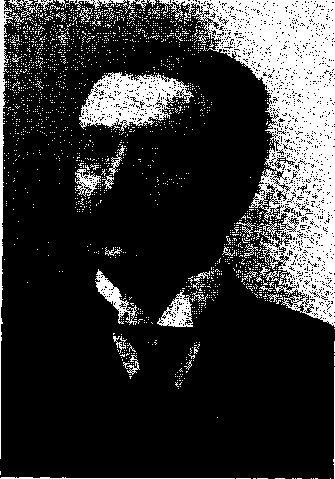
LOUIS DOHME
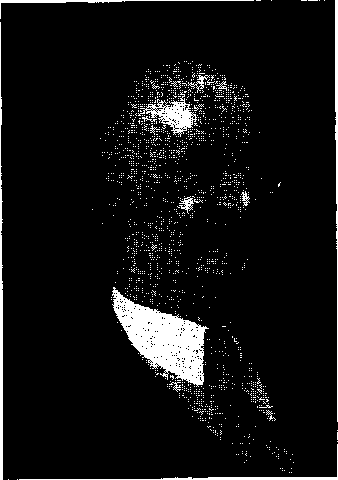
PROFESSOR PAUL HAUPT
IN MEMORIAM
PHILIP AUGUST ALBRECHT. Born
in Warnfried an der Werra, Kurhessen,
on November 13th, 1842, he died in
Baltimore on April 10th, 1909.
With his parents, he came to America
in 1847. He was educated at Knapp's
Institute. For many years he was en-
gaged in the tobacco export business.
He had an extensive library, was a
philatelist and collector of coins. In
1897 he published a dissertation en-
titled "Astronomical Doctrines pre-
sented in New Aspects."
*
LOUIS P. DIETERICH. Born in
Lich, Germany, he died in Baltimore on
November 15th, 1922, in his 81st year.
His very appearance marked him as a
man of unusual character. An artist
of reputation, particularly in portrait-
ure, he was also a musician of fine
sensibility and endowed with a won-
derfully rich voice which held unbroken
to the last. For over fifty years he
was an active member of the Harmonie
Singing Society. Proud of his race, he
was true to its traditions even in the
frenzied days that marked our un-
warranted interference in European
affairs.
*
JUDGE JOHN J. DOBLER. On Fri-
day, September 21st, 1923, in the Su-
perior Court Room, memorial services
were held in honor of the memory of
John J. Dobler. The large room was
filled.
John J. Dobler was born in Balti-
more on June 6th, 1852. At the age
of sixteen, he was graduated from the
Baltimore City College with the class of
1868. He was the valedictorian of his
class, his oration having for its subject
"Life Purposes," so typical of the man
as we later knew him.
Upon his graduation he secured em-
ployment in the library of the Peabody
Institute; subsequently he took up the
study of law and was graduated, at the
age of twenty, from the University of
Maryland, in the class of 1872, his
standing being first. He was required
by the law to wait a year before being
admitted to the bar.
He was elected to the bench in 1894.
On June 2nd, 1922, a few days before
he was seventy, he retired. The Legis-
lature of 1922 wished to extend his
time; and in this desire most earnestly
united the Bench, the Bar, and the pub-
lic; but Judge Dobler refused to per-
mit such action as he had always cher-
ished the thought of actual retirement
and ease at that period of his life. His
sincere desire was that no action should
be taken; but he could not prevent the
Legislature from passing a resolution
of commendation and esteem.
Judge Dobler was of German des-
cent. In 1922 he acted as treasurer of
the "Drive" to secure the sum of
$250,000 for the General German Or-
phan Home at Catonsville.
*
LOUIS DOHME. Mr. Louis Dohme
was born in Oberkirchen, Prussia, July
6th, 1837, died December 10th, 1911.
Mr. Dohme can justly be classified
among the founders of this society,
having been one of the twenty-three
that became members on March 16th,
1886,—the first meeting following the
permanent organization of the Society,
February 16th, 1886.
At a very youthful age, and shortly
after his arrival in Baltimore from
Germany, he was apprenticed to the late
A. P. Sharp, then in the retail drug
business. By dint of close application,
indomitable perseverance and study, he
mastered both the drug business and
the English language, so that in 1860,
when but twenty-three years of age, the
firm of Sharp & Dohme was formed.
On the retirement of Mr. Sharp in
1885, Mr. Louis Dohme became the ac-
tive head and general manager of the
firm, the duties of which he discharged
with such singular ability and success
that at the time of his demise, as presi-
[33]
dent of the corporation of Sharp &
Dohme, Manufacturing Chemists, he had
achieved for the company a world-wide
reputation.
*
FREDERICK W. FELDNER. Born
in Baltimore, June 11th, 1865, he, to-
gether with his wife, daughter, son-in-
law and chauffeur, was killed when
crossing a railroad track near Cape
May, New Jersey, on August 9th, 1910.
Though of humble parentage and
poor circumstances, he had great energy
and ability, and through his own efforts
succeeded in obtaining a college educa-
tion and became a successful member of
the Baltimore Bar.
*
EDGAR HILARY GANS. Born in
Harrisburg, Pa., November 4th, 1856,
died September 20th, 1914. In 1870
he came to Baltimore with his parents
and here spent the remainder of his
life. He graduated at the head of his
class in the Baltimore City College and
also led his class in the law school of
the University of Maryland. He was
admitted to the Bar in 1877 and three
years afterward was appointed deputy
state's attorney, which position he held
until 1888.
In 1883 he became a lecturer on
criminal and testamentary law in the
University of Maryland. His erudition
and ability marked him as a leader of
the Maryland Bar.
*
JOHN F. GONTRUM, lawyer and
poet, was born in Baltimore county,
February 16, 1857, and died there
December 27, 1909. Both his father
and mother came to America from Ger-
many with their parents at an early age.
As a boy, he attended the German-
Lutheran Parochial School, taught by
Edward F. Leyh, the well-known
German-American poet. Later, he at-
tended Knapp's German-English School,
Bethel Academy in Virginia, and St.
John's College at Annapolis. Upon
his graduation from the latter institu-
tion in 1878, he took up the study of
law and was admitted to its practice in
1880.
Of the poems which he contributed
to various periodicals from time to time
throughout his life, the best known are
Fort McHenry, Poe, and the Old Bridle
Path. These have been quoted on oc-
casions of a public nature and included
in a number of anthologies of verse.
Fort McHenry, by its exalted tone of
patriotism, was instrumental in molding
the sentiment that finally brought about
the conversion of the old fortress into
a national shrine. The poem, Poe, was
written in 1909, a few months before
the author's death, in indignation at
the judges' action in refusing to admit
Edgar Allan Poe to the so-called Hall
of Fame. Its inspired beauty and power
of imagination make it a really impor-
tant addition to American literature.
The Old Bridle Path is a pastoral of
great charm. The picture which it
portrays of the woods and fields of the
author's youth is pervaded by a tone of
regret and mild melancholy.
Poems, by John F. Gontrum, were
published in 1910.
A. v. WYZECKI.
*
PROFESSOR PAUL HAUPT. Born
at Görlitz in Silesia, November 25th,
1858, the scion of an old and well-
known Protestant family, Paul Haupt
received an excellent education and
early exhibited signs of unusual bril-
liancy. While very young he took up
the study of Hebrew. Graduating from
the Gymnasium Augustum in Görlitz,
he spent two years at Leipzig and in
1878 received his doctorate in Semitic
Languages with high honors.
Haupt's maiden book, Die sumer-
ischen Familiengesetze, was an epoch-
making production. For the first time
Sumerian and Assyrian phonology and
morphology were studied from the
standpoint of the modern scientific
philologist.
[34]
After receiving his doctorate Haupt
spent some time studying in the British
Museum. The fruits of this work re-
sulted later in the publication of his
Akkadische und sumerische Keilschrift-
texte. This was the first volume in the
great series of the Assyriologische Bib-
liothek, edited from the beginning by
Dielitsch and Haupt. In 1880, he
habitated himself as a Privatdocent for
Assyriology in the University of Gött-
ingen. He early became the foremost
authority on the Sumerian language.
Thanks to the discernment of its
first president, Daniel Coit Gilman,
Haupt, before he had reached the age
of twenty-five years, was appointed
Professor of Semitic Languages in
Johns Hopkins University.
Many and various were the works
that freely flowed from his pen. Of
his influence it was said (W. F. Albright
in Paul Haupt Anniversary Volume) :
"Professor Haupt's influence, both as
a scholar and as a teacher, upon Ameri-
can Biblical and Semitic studies, has
been great. When he came to America
in 1883 to found the Oriental Seminary
of Johns Hopkins University, there was
not a single trained Semitic philologist
of the modern school available in Amer-
ican Universities, and there was prac-
tically no original Semitic research in
this country."
There were few subjects, academic,
aesthetic or journalistic, in which he
was not interested, and with his vast
Semitological erudition be combined a
wide information in such fields as Ger-
manic philology, English literature,
music and medicine."
He died on December 15th, 1926.
*
CHARLES CHRISTOPHER HOMER.
Born in Baltimore, November 1st, 1847,
he received his preparatory education
at Scheib's School, afterward matricu-
lating at the University of Georgetown,
graduating therefrom in 1867 with the
degree of A. B., later receiving that of
Master of Arts. He began his com-
mercial career as a salesman, afterward
establishing the firm of Foss and
Homer, which was dissolved in 1880.
He then entered the financial field.
In 1878 he was elected a director of
the Second National Bank, advancing
in time to its presidency. In 1897 he
became president of the Baltimore
Clearing House, which position he held
until 1911, when he declined a re-
election. He was also vice-president of
the Savings Bank of Baltimore and of
the Safe Deposit and Trust Company.
He was chairman of the committee
which drafted the so-called "Baltimore
Plan" for the creation of a safe and
elastic currency, which received the
unanimous endorsement of the Ameri-
can Bankers Association in convention
of 1894. He was President and Chair-
man of the Executive Committee of the
National Currency Association of Mary-
land, from its formation in 1909 until
his resignation in 1914.
Public spirited in a high degree, he
was active in all matters affecting the
common welfare, yet withal never parti-
san in affairs political. For years he
was a director of the General German
Orphans Home.
He died on September 13th, 1914, at
Bremen, Germany.
*
CHARLES C. HOMER, JR. Born in
Baltimore, October 15th, 1870, as the
eldest son of Charles Christopher and
Frances M. (Holthaus) Homer, died on
March 9, 1922.
He attended Zion School, Loyola Col-
lege, and the Law School of the Uni-
versity of Maryland. He practiced law
for a number of years. In 1896 he
was elected a Vice-President of the
Second National Bank of Baltimore,
later succeeding his father as President
thereof. At the time of his death he
was President of the Savings Bank of
Baltimore and was a Past Grand Master
of the Masons of Maryland.
He was also a director of the General
German Orphans Home, succeeding his
father in this office.
[35]
LOUIS PAUL HENNIGHAUSEN. A
founder of the Society for the History
of the Germans in Maryland, and its
President from 1901 to 1906.
Born December 18th, 1840, in Fulda,
Prussia, son of Heinrich Johann and
Marie (Schulz) Hennighausen. The
father was an officer in the Prussian
army.
Their son acquired what was equiva-
lent to an excellent academical educa-
tion in the schools at Hersfeld, Prussia.
He also had the advantage of private
tutors who instructed him in English,
French, drawing, and the commercial
branches. In his fifteenth year he came
to Baltimore, which was destined to be
the scene of his life's labor and suc-
cesses. Obtaining a clerkship, he gave
his spare time to study and attended
a night school.
At the outbreak of the Civil War he
was in Richmond; though persistently
urged to cast his lot with the Confed-
eracy he refused and returned to Wash-
ington, where he took a clerkship in
Willard's Hotel. Here he joined a
militia rifle company, which entered the
service of the United States as Com-
pany A, 8th Battalion, District of Co-
lumbia Volunteers, April 11th, 1861,
for a term of three months in guarding
the Potomac River. In August of the
same year he joined the Forty-sixth
Regiment, New York Volunteers, for
three years, as second lieutenant, and in
1862 was promoted to first lieutenant.
He was engaged in the siege of Fort
Pulaski, Georgia; the operations about
Charleston, South Carolina, and in the
Peninsula Campaign. He commanded
his company in the battle of Secessions-
ville, James Island, South Carolina.
Contracting the swamp fever he was
compelled to resign after a service of
two years and when further promotion
was open to him.
After a brief sojourn in Baltimore
he went to Washington where he ac-
cepted a position as a teacher in a pri-
vate school, giving his spare time to the
study of law. Afterward he entered
the Maryland Law School, from which
he graduated, and was admitted to the
Bar in Baltimore in March, 1868.
He followed his professional career
with marked success until his end.
Though a Republican in political
affiliation, he was at all times indepen-
dent in his course and action, support-
ing those candidates and measures that
were best calculated to promote the wel-
fare of the people and the state.
He was a man kind and benevolently
inclined and actively engaged in many
charitable works. From 1887 to 1913
he was president of the German Society
of Maryland, and for many years presi-
dent of the General German Aged
Home, of which he was a charter
member.
He devoted much of his leisure to
historical research and as President and
member of the Society for the History
of the Germans in Maryland contributed
many interesting and meritorious
articles to its publications. Probably
his most important work was the story
of the German Society in Maryland.
So diversified were his interests and ac-
tivities that at one time he held mem-
bership in no less than twenty-four
societies.
He died at his home in Towson on
February 2nd, 1918.
At the meeting of this Society fol-
lowing his death the following memorial
was ordered to be spread upon its min-
utes:
THIS LEAF IS DEDICATED TO THE
MEMORY OF OUR LATE
PRESIDENT
LOUIS P. HENNIGHAUSEN
A FOUNDER OF THE
SOCIETY FOR THE HISTORY OF THE
GERMANS IN MARYLAND
Who, during the many years of his use-
ful labor in the profession of law, yet
found time to devote to benevolence
and the aid of his fellow-men.
[36]
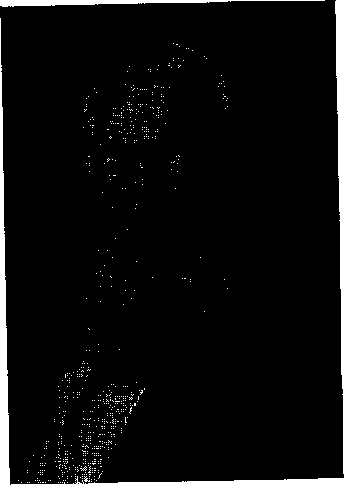
LOUIS P. HENNIGHAUSEN
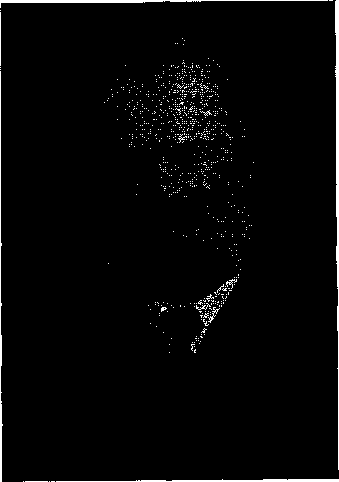
LOUIS HOFFMANN
Who, proud of his race, versed in its
tongue and traditions, was moved there-
by to bring forth out of the forgotten
past the story of the work and activity
of those who had come from the Ger-
man Fatherland, and in field and farm,
in mart and workshop, in peace and
war, had given of their labor, their ken,
and their blood to the upbuilding and
glory of America.
Who, himself, as a young man, full
of high resolve and the ideals of lib-
erty, had borne arms for the abolition
of slavery and the preservation of this
Nation's unity; and later, in time of
peace, actively participated in those
civic duties which make for the preser-
vation of freedom and the progress and
enlightenment of the commonalty.
Who, in the fullness of years, never
abated his activity in the manifold in-
terests that encompassed his days. Of
a cheerful disposition, impartial in
thought and considerate in feeling,
Louis P. Hennighausen fairly judged
his fellows and associates, and, depart-
ing, left to them a memory respected
and cherished.
*
LOUIS HOFFMANN, born in Augs-
burg, May 29th, 1859, he died in Balti-
more, February 26th, 1925. He died
of pneumonia brought on by exposure
in the blizzard of January 3rd.
He was of that group of men who
in modest circumstances, by the example
of their lives, impress upon their fel-
lows a feeling of respect and admiration
of and for the qualities and character
of the race from which they sprang.
Though in the main self-taught, he
was a man of gifted tongue and versed
in literature, which, with his genial
grace, classed him as a man of culture.
He came to this country a lad of
twelve years and his early days were
marked by hardship and privation. His
energy was superior to his employ-
ments and he progressed until he ulti-
mately engaged in the importing busi-
ness. This prospered until the adop-
tion of a heavy tariff made it unprofit-
able.
In the meantime he had been elected
a member of the City Council, this in
a ward overwhelmingly Democratic and
he a Republican—a strong tribute to
his personal popularity. After his term
expired he was appointed a Commis-
sioner for Opening Streets, in which
office he served some four years. For
a short period thereafter, he served in
the Immigration Bureau as interpreter,
from which position he was advanced
to inspector and thereafter he became
Assistant Commissioner, which respon-
sible position he held until his death.
In this office his humane spirit found
full expression. Never a poor immi-
grant or stowaway, regardless of his
origin, but found in Mr. Hoffmann one
who understood and sympathizingly
helped him in his plight; through his
example and contact, the Port of Entry
in Baltimore never assumed the hard-
ness and terror that characterized and
made other ports so dreaded.
Of an independent nature at a time
when politics were much perturbed and
measures were often weighed more for
their political effect than for the public
welfare, he was honest and fearless, and
so won the confidence and approbation
of his constituents in full.
An ardent advocate of sound bodily
development, he introduced and had
passed the ordinance making physical
education a part of the public school
curriculum.
From his early boyhood to his last
days he was active as a member of the
Turnverein Vorwaerts, which he had
helped to build up and make a center
of bodily and cultural development of
the Germans of Baltimore.
The virtues and good qualities so
strong in him and which made him a
conscientious citizen and worthy Amer-
ican, were the heritage of his German
blood.
[37]
PASTOR HOFMANN. On Friday,
May 18th, 1928, while standing in front
of the altar of Zion Church engaged
with his confirmation class, Pastor Hof-
mann was stricken, and though at once
taken to a hospital, died early Saturday
the 19th of May, without having re-
gained consciousness.
Of him the Baltimore Sun editorially
said:
"Zion Lutheran Church has long
stood as a dominating religious feature
in the very center of Baltimore's busi-
ness life, a sort of spiritual fortress
challenging human evil, inspiring
human good. Like St. Paul's Episcopal
Church, it has been a part of older
Baltimore, and, like St. Paul's, it has
stood steadfast and unperturbed amid
all the material changes around it.
Associated intimately with the best and
most influential German elements of
Baltimore's population, its clergy and
its congregation have always held a
unique place in the respect and warm
regard of every other part of the com-
munity. Therefore, in the death of
Rev. Dr. Julius K. Hofmann we do not
think of the passing of a Lutheran min-
ister but of the loss of a religious
leader, who belonged as much to all
Baltimore as to his particular denom-
ination.
"A German by birth, he adopted Bal-
timore in all sincerity and truth and
never faltered in his allegiance to this
city and this country even in those four
years which tried the souls of our
foreign-born sons as no other four years
in our history has done. And it was
not that he loved Germany less but that
he loved honor and loyalty more.
"No sensationalist, no spectacular
preacher, he walked in the old paths;
he remained true to the old creeds. He
could do no other. For him there was
no other. The world might rock around
him, but it could not shake him.
"A most admirable specimen of the
German mind and character at its best.
And what amazing mental grasp, what
astounding mental achievements—mas-
ter of fourteen languages, author of ed-
ucational and religious works sufficient
to fill a small library—he carried on
the routine work of his church almost
without a break, and died, as he would
have wished, with the sword of the
spirit in his hand, with the word of
truth on his lips.
"All this is to measure him in ordi-
nary human terms. What describes him
better than anything else is the title
bestowed on him by love—that of
"Pastor" Hofmann. He was a pastor,
the guide and friend of thousands in
and outside of Zion Church. May Ger-
many send us many more like him.
Of such is not only the kingdom of
Heaven but the good will and happiness
of earth."
Julius Kayser Hofmann was born on
April 9th, 1865, in Friedberg, Upper
Hesse. His father was a fencing master
attached to the Grandducal Hessian In-
fantry Regiment ''Kaiser Wilhelm."
Young Hofmann received a good educa-
tion. He studied theology at the Uni-
versity of Giessen. In 1889 be received
a call to act as assistant to Pastor
Scheib, preacher at Zion Church.
Always active, he founded the Young
People's Society, an association for the
study of classical church music, a Sun-
day school library, and edited and
issued a church bulletin. In 1890 he
returned to Europe and there married
Louise Adelé Chatin. For many years
he was instructor in the German de-
partment at Johns Hopkins University.
On January 5th, 1895, Pastor Scheib
resigned his office and Pastor Hofmann
succeeded him.
In the days preceding his funeral his
body lay in state before the altar in
the church and thousands of Balti-
moreans of every station in life and all
faiths passed by mutely marking their
respect for the man who understood
them and had been guide, friend and
benefactor.
On Tuesday morning, amidst simple
and impressive ceremonies, he was laid
to rest in the church yard under the
linden tree planted by himself.
[38]

PASTOR JULIUS K. HOFMANN
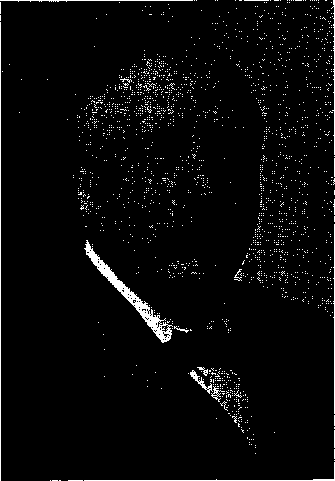
PROFESSOR CHARLES F. RADDATZ
His friend, Rev. Siegmund G. von
Bosse, of Mount Vernon, New York,
officiating, said in part:
"Erst wenn das Licht erloschen ist,
merkt man, wie herrlich es geleuchtet.
Die Wucht der Dunkelheit lässt den
eingebüssten Schein im Geistesauge
wieder aufflammen und verschönt die
herbe Stunde einsamen Gedenkens,
Einen Grossen haben wir Dem wieder-
gegeben, der ihn gesandt, eine Leuchte
am Firmament unseres Daseins. Chopins
Trauermarsch hätte eigens für ihn
geschrieben sein können, für diese
Bismarckgestalt mit ihren kindlich-
schlichten Seele; für diese Denkerstirn
mit ihren zart-besaiteten Regungen;
für diesen trotzig, unbeugsamen streb-
enden Felsen. Noch sind die Helden im
Lande, die eine ersehnte Friedensbrücke
bauen helfen zwischen den Völkern.
Noch rühmen wir ihr Werk und rühmen
ihre Namen. Es sind Leuchten am Ver-
söhnungshimmel der Menschheit, Hier
aber war Einer, dessen Leben ebenso
hell leuchtete. Verlöscht mag es sein,
doch der Wiederschein verbleibt und
wärmt und tröstet.
"Wir denken seiner zuerst als
Mensch. Das war er im besten Sinne
des Worts. Ihm galt der Wahrspruch:
'Frisch, fromm, fröhlich, frei!' Er
wollte nicht mehr und nicht weniger
sein. Er gab sich einem Jeden voll
und ganz. Er war Idealist und suchte
nur das Gute in seinen Mitmenschen.
Er war Künstler. Das Lied, das Bild,
das Schöngeistige zog ihn an und
fesselte ihn. Im jedem Gebiet war er
nicht nur beschlagen, sondern Meister.
Er zog die Geistes verwandten nur zu
leicht an sich. Keiner wäre an Balti-
more vorbeigegangen ohne ihn aufzusu-
chen. Er war ein Denker, ein echter
Philosoph. Er war ein beneidenswerter
Freund. Und als solcher rede ich für
Ungezählte, denen er Freund gewesen.
Die Freunde waren auch nicht auf eine
bestimmte Klasse beschränkt. Zwei
Orden des deutschen Kaisers nannte er
sein. Aber seine Freunde gehörten
allen Ständen an. Von Hochmut wusste
er nichts. Ueber sein Familienleben
zu reden widerstrebt mir. Es sind
eigene, heimische Besitztümer. Sein
Haus, seine Familie waren ihm Heilig-
tum. Sie blieben ihm als heiligster
Besitz. Dort arbeitete, wirkte, plante,
betete er. Stolz war er wohl auf sein
Heim. Aber es blieb sein in der
letzten Bedeutung des Wortes. Und das
wollen wir ihm hier unangetastet lassen.
"Wir denken seiner darum weiter als
Stammesgenosse. Er war ein Deutscher.
Ueberzeugt und echt, wenn je Einer es
war. Gäbe es eine deutsche "Hall of
Fame" in unserem Lande, er müsste als
Erster hinein. "Meinen Deutschen will
ich dienen" könnte man über sein Leben
Setzen. Deutsche Vereine durchs Land
hin, deutsche Verbände über dem Meere,
Amerikaner englischer Zunge, Deutsche
Tag-Feiern, seine Schriften, sein Ge-
dichte, seine Lieder, sie künden: "Dieser
war ein Sohn Germanien." Wir von
früher wussten's immer. Aber auch die
Neuherzugezogenen mögen's bezeugen.
In seinem Zions Kalender 1928 schrieb
als Widmung der Gehilfe: 'Dem unge-
beugten Kämpfer für deutsches Wesen,
Pastor Julius Hofmann, sei es in Ehr-
furcht und Verehrung geboten.'
"Keiner hat es so verstanden wie
Julius Hofmann, das wirklich Grosse
unseres Stammes so treffend zu schil-
dern wie er. Im Hohen Lied singt der
Sänger: 'Stark wie der Tod ist die
Liebe, fest wie die Unterwelt ihr Eifer;
ihre Gluten Feuergluten, Gottesflamme.
Grosse Wasser vermögen nicht zu
löschen die Liebe und Ströme fluten sie
nicht hinweg.' So war seine Liebe zur
Heimat. Und drüben wurde das aner-
kannt. Wir wollen uns kurz fassen.
Was einem Ludwig Thoma als Ab-
schiedsgruss gewidmet ward 1921, das
möchten wir auf ihn, unseren Stammes-
genossen, anwenden dürfen:
Was die Heimat dir gegeben, all das
stillverschwiegne Glück,
Gabst in deinem reichen Leben Du
ihn hundertfach zurück.
"Dr. Hofmann war aber auch Ameri-
kaner. Und er war stolz darauf. Mir,
als geborenem und überzeugten Bürger
meines amerikanischen Landes, wird es
leicht, ihm die Treue meinem Lande
[39]
gegenüber zu beweisen. Er sprach wie
ein Hiergeborener; wie im Deutschen
war auch im Englischen sein Stil knapp,
klar und meisterhaft. Dazu kamen
Verständnis, Kenntnis, Urteil und Liebe.
In der Legislatur des Staates, im Rat-
haus, bei leitenden Staatsmännern war
er ein gerngesehener und geehrter Be-
sucher und Mitarbeiter. Darüber hinaus
suchte er inständig, durch neunzehn-
jährige Verbindung mit Johns Hopkins,
bei Festen and Empfängen, den deutsch-
en Namen würdiglich zu vertreten
zum Besten des Landes. Und es gelang
ihm über Bitten und Verstehen. Unsere
Pflicht Amerika gegenüber, war der
neue Gedanke, den er uns, seinen
Schülern einimpfte als Leitmotiv für
unsere Gedankengänge.
"Zusammenfassen möchte ich sein
Bekenntnis als Amerikaner in seinem
Verhältnis zu dem deutschen Empfinden
seiner Seele in das Lied, womit er
seinen Bund, "Neuland," bestehend aus
eingewanderten Deutschen, begrüsste:
" 'Sei gegrüsst uns, Licht aus Westen,
Ewig junger Sonnenstrahl;
Wo, bereitet von des Besten,
Heimat winkt uns allzumal,
Mit frohen Ruf, mit hellem Blick,
Sei umfangen, neu Geschick.
'In die Scholle woll'n wir senden
Tiefe Wurzeln, säfte-reich
Aufwärts woll'n den Pfeil wir lenken
In den neuen Kraftbereich.
Doch bleibt, was gut, ans allzeit gut,
Treu befohl'n in Gottes Hut.
'Seid gesegnet, liebe Hände,
Die ihr freundlich nach uns streckt;
Und an unseres Lebens Wende
Gold'nes Hoffen in uns weckt.
Schliesst eng den Kreis,
Und kling' die Weis', Heil dir Heimat,
Lieb und Preis!'"
Rabbi Morris S. Lazaron followed
with a tribute to the virtue and charac-
ter of Pastor Hofmann and the respect
in which he was held by his fellow
citizens.
At the grave Prof. Ernst Feise recited
a poem appropriate to the occasion and
the United Singers of Baltimore sang a
farewell.
CHARLES F. RADDATZ. Born No-
vember 18th, 1838, died January 14th,
1914. Sturm und Drang, adventure
spiced no doubt with romance entered
into the youthful experience of Charles
F. Raddatz. Born in Rostock, Meck-
lenburg, he was early enticed by the
Baltic's siren song, like many of his
forbears, perhaps, for he was in appear-
ance a viking. Before he was twenty,
he had sailed the seven seas over. Oc-
casionally he would talk of his life
a-shipboard and displayed familiarity
with the fauna of the great Southern
Ocean, especially its monster squids and
its huge sperm whales.
At the age of twenty he landed in
Galveston. This was in 1858, in the
middle of the fateful administration of
Buchanan, the last of our first series
of presidents. Those were troublous
times. Young Raddatz espoused the
politics of his new friends. At the out-
break of the Civil War he joined a
military company formed by the mer-
chants of Galveston for coast duty. He
served as First Lieutenant in Cook's
Battalion of Artillery, Department of
the Trans-Mississippi.
He married the daughter of Judge
Duff of Texas. To this union was born
one child, a son who died in infancy.
At the close of the Civil War he paid a
visit to Europe and came back realizing
that the new ties had forever taken the
place of the old and that his real home,
the country of his allegiance, was the
United States of America.
In 1870 he came to Baltimore in
obedience to an impulse which urged
him and many others as far north
as they could go without leaving the
southland. In this migratory movement,
enriching as it did the literary and pro-
fessional life of Maryland, were num-
bered such men as Basil Launeau
Gildersleeve, Sidney Lanier, Chapman
Maupin, Powhatan Clarke, Henry E.
Shepherd, Charles C. Wight, and others,
some of them intimate friends of Prof.
Raddatz.
From 1870 till the time of his death
in 1914, save for a short period of ill-
[40]
ness, he was head of the Department
of German at the Baltimore City Col-
lege, and for eight years was Vice-
president of that institution.
His death occurred at the University
Hospital, Baltimore. His last hours
were soothed by the loving ministra-
tions of friends, among whom may be
mentioned Dr. John C. Hemmeter and
Prof. Stephen F. Norris, both former
students under his tutelage.
His mortal remains are interred in
Loudon Park. His memory still lives.
Prof. Raddatz was more than a
teacher; he embodied a rare personal-
ity. In the classroom he was an inspir-
ation, and he enjoyed as he compelled
the good will and respect of all the stu-
dent body.
Prof. Raddatz was always in affilia-
tion with the Johns Hopkins University
and until the very last was a contributor
to the Philological Journal edited by
Prof. Gildersleeve. He was much in
demand as a lecturer on historical sub-
jects, and was also esteemed as a music
critic. He had marked facility in trans-
lating lyrics from other languages into
good singable English.
Charles F. Raddatz was a thorough
German, a loyal American, a good
Democrat, an ex-Confederate soldier to
the last, a gracious host, as a guest an
ornament, a good friend, an enemy to
be reckoned with though not implacable,
a boon companion, charitable in his
judgment of others, more than kind,
choleric to be sure but absolutely de-
void of rancor, with huge capacity for
enjoyment, a Nordic, if there ever was
one, of noble bearing, bluff and hearty
with men, daintily polite to the ladies,
immaculate, though simple in his attire,
mentally and physically clean, and in
consequence immune from vulgarity,
radiating cheer and good will, respon-
sible always to the appeal of the finer
things.
After a long life, the contacts of
which with thousands of other lives
left impressions peculiarly cherished,
Charles F. Raddatz entered into the be-
yond. We follow anon. Auf Wieder-
sehen, alter Freund!
PHILIP H. FRIESE.
*
ERNST SCHMEISSER. A capital-
ist and prominent figure in financial
circles of Baltimore City. Born March
9th, 1851, in Siegen, Westphalia, and
died in Baltimore on April 5th, 1923.
Educated in the schools of his birth-
place, he emigrated to America on
August 19th, 1868. His first position
was with Kummer & Becker, bankers,
as a clerk at $2 per week. He held
this place for three years. In 1871 he
went with the tobacco firm of Gail & Ax
as clerk. After six years he began busi-
ness on his own account as a member
of the firm of Lauts & Schmeisser, ex-
porters of leaf tobacco. Marrying the
daughter of G. W. Gail, he went into
business with his father-in-law in 1882
as a member of the firm of Gail & Ax.
In 1891 this business was sold to the
American Tobacco Company and he re-
mained manager of its Baltimore
Branch and that of its successor, the
American Snuff Company, until 1908,
when he retired.
Mr. Schmeisser was a director of the
Hopkins Place Savings Bank, as also
of the Maryland Casualty Company, the
German-American Fire Insurance Com-
pany, and the Mutual Fire Insurance
Company. Though several times offered
nomination for high office by the Re-
publican party, he always declined. For
over thirty-five years he was active as
director of the General German Or-
phans Home, and was its President for
twenty-five years.
He was a man of jovial disposition
and kind heart, ever ready to help any
worthy cause or public movement, and
was looked up to as a leader of his
fellow-racials in Baltimore.
*
LOUIS SCHNEIDER. Honorary Pres-
ident of the United Singers, ever active
in all affairs affecting the social and
musical world of the Germans of Balti-
[41]
more City. He died suddenly at his
home "Sans Souci," Arlington, on
March 28th, 1927.
He was born at Laufersweil in the
Rhein-Provinz, on February 17th, 1847.
He emigrated to America shortly after
the Civil War. Arriving here he ex-
perienced vicissitudes common to the
experience of many immigrants strange
to the land, its tongue and its ways,
before he successfully engaged in a
number of business ventures.
He was president of the Sängerfest
of the Northeastern Sängerbund held in
Baltimore in 1888.
*
LOUIS C. SCHNEIDEREITH. On
Saturday morning, July 8th, 1922, after
a short illness, Louis Charles Schneid-
ereith, senior member of the firm of
Schneidereith and Sons, Printers, passed
into the infinite.
Mr. Schneidereith was born in Bal-
timore in 1852, of German parentage.
He was educated in Knapp's Institute,
an excellent private institution of that
day, where, in addition to a sound gen-
eral education, he acquired that mas-
tery of English and German that made
him an engaging conversationalist as
well as a graceful and concise public
speaker. Upon his graduation, he en-
tered the printing office of his father,
Charles W. Schneidereith, where he
quickly learned the technicalities of
printing-house management, and be-
came his father's chief reliance. For
over fifty years he largely directed the
affairs of this firm.
Second, perhaps, to his pride in turn-
ing out a fine piece of printing, was
the fact that his was the oldest com-
mercial printing establishment in Bal-
timore, having been founded in 1849 by
his father, and continuously operated
without a break by three generations of
the family. He left this business, in-
creased and prosperous, to the care of
his only son, C. William Schneidereith,
who represents the third generation of
the printing house of Schneidereith and
Sons.
Mr. Schneidereith was one who be-
lieved that the inner consciousness of
correct living was of more importance
than the mere formal observance of
man-made creeds, and his life was filled
with unostentatious acts of kindness
that gave practical expression to his
theory of a life well lived.
His avocations might be divided into
three groups; the furtherance of those
social and civic organizations that make
for the development of a sound mind
in a sound body; the care of the help-
less and needy; and the purification of
public life.
Particularly was he active in the
Turnverein Vorwaerts, a pioneer organ-
ization in the work of systematic devel-
opment of mind and body. With it he
was associated from earliest boyhood;
in mature years he was its secretary,
then its president, and finally its hon-
orary president. It was during his in-
cumbency that the association, after
years of effort, succeeded in having
physical training introduced into the
public schools of Baltimore.
The second phase of his activities—
the care of the helpless and needy—
found expression in the twenty-five
years of service as secretary and direc-
tor of the German Orphan Asylum; his
keen interest in the Aged People's
Home; and his labor as director and
executive committeeman of the German
Society of Maryland.
Thirdly, he was an active participant
in every movement for clean and pro-
gressive government, and took an active
part in the work of such civic bodies
as the Independent Citizens' Union, Re-
form League, Municipal League, and
the Just Representation League. He
was likewise a member of other organ-
izations of an educational, technical,
and social nature.
His well-rounded life of seventy
years was filled with kindly deeds and
thoughtful consideration for those
about him, whatever their station in life.
[42]
PROFESSOR C. F. EMIL SCHULTZ.
Born in Görlitz, Silesia, on June 29th,
1847, died in Baltimore, February 19th,
1914.
Early in his boyhood he took to gym-
nastics and soon became an active
leader in such work. As a physical di-
rector he directed gymnastic work in
Davenport, Salt Lake City, and San
Francisco. Returning to Baltimore he
was director of the "Gym" at the Y. M.
C. A. for some twelve years. He after-
ward opened a private gymnasium at
the southeast corner of Charles and Bal-
timore Streets. Later he became the
first supervisor of physical education
of the public schools of Baltimore,
which position he held up to the time
of his death; in all some sixteen years.
He was an honorary member of the
Turnverein Vorwaerts.
*
LOUIS THEODORE WEIS, who died
in Baltimore, January 12th, 1924, at the
age of 66 years, was born in Germany
and up to the age of 10 attended the
elementary schools in that country. His
father emigrated to America and soon
thereafter the rest of the family, con-
sisting of his mother, himself, a younger
brother and two sisters, came to join
the father. While the family were at
sea on the way over, the father died,
and upon arriving in this country,
Louis, then 10 years of age, was com-
pelled to find employment at once to
help support the family. He entered
the printing trade and while still young
became assistant foreman of the press
room of the old Baltimore American.
Later he became manager of the Chesa-
peake Label Company. By hard work
and constant study he acquired a broad
knowledge of the English language and
also of the political principles of this
country. He was an ardent Republican
and a member of the Young Men's Re-
publican Club and the German-Ameri-
can Lincoln Club, and served for many
years as president of this active political
organization.
In 1891 he organized the American
Label Manufacturing Company, which
company was later acquired by the
United States Printing and Lithograph
Company, one of the largest printing
industries in the country. During the
various political campaigns his ability
as an organizer became recognized and
he became one of the leaders of the Re-
publican party in the State of Mary-
land. In 1896 he was appointed one of
the Liquor License Commissioners, and
was reappointed in 1898. He had
formed a close friendship with George
L. Wellington, United States Senator,
and this relationship existed through-
out his life. In 1901 President Roose-
velt appointed him United States Com-
missioner of Immigration at the port of
Baltimore, reappointed him in 1905 for
a second four-year term, and in 1909
President Taft reappointed him for a
third four-year term.
During all of these years he still kept
the active management and the direction
of the constantly growing label print-
ing business, and in 1911 was made
General Manager and Vice-President of
the United States Printing and Litho-
graph Company. These increased du-
ties compelled him to resign as Immi-
gration Commissioner, which office he
had filled for ten years with an ability
and understanding unequalled by any-
one in the Federal service, as expressed
by a letter of regret of his resignation
by the Secretary of Commerce, Mr.
Nagel.
Louis T. Weis was always closely
identified with the German interests in
this city and made frequent trips to the
old country. He proved himself a
public spirited citizen in all undertak-
ings that tended toward the benefit of
the State and the City of Baltimore. His
name was always found among those
working for civic improvement. He
was a member of the Masonic Fratern-
ity, of the Turnverein Vorwaerts, and
the Merchants and Manufacturers Asso-
ciation.
His religious affiliation was with the
Lutheran Church, and although he was
a member of St. John's Lutheran
[43]
Church in his neighborhood, the high
esteem which he held for Pastor Hof-
mann and the latter's eloquence induced
him to attend Zion Church's Sunday
services. In the Weis' charming coun-
try place, Red Top, Pastor Hofmann
held annually his "Waldandacht" ser-
vices.
Louis T. Weis was one of the strong
characters who lived up to his motto,
"Be honest, choose your vocation, learn
it well, work hard and conscientiously,
live within your means, save and in-
vest your savings judiciously."
A. v. WYZECKI.
*
GEORGE L. WELLINGTON. Born
in Cumberland, Md., January 28th,
1852, the son of John Adam Welling-
ton, a native of Germany. His early
life was a struggle with poverty. At
eleven years of age he was employed
in a store. At eighteen years he was
accountant in a bank, and later cashier
thereof. Industrious and ambitious, he
devoted himself to books and acquired
that education denied him by lack of
schooling. A Republican in politics he
was elected County Treasurer of Alle-
gany county. Under President Harri-
son he held the post of Sub-Treasurer
in Baltimore. In 1894 he was elected
a Representative to Congress. Always
active politically, he now became a fac-
tor of importance. As chairman of the
Republican State Central Committee, he
managed the campaign which elected
Lloyd Lowndes as Governor of the
State,—the first Republican holder of
this office. The Legislature was also
controlled by the Republicans, and by it
he was elected to the United States Sen-
ate. Though he was an orator of abil-
ity, no matter of great moment arose to
engage his attention until the Spanish-
American War. This he bitterly op-
posed until all other measures failed.
He was unalterably opposed to im-
perialism and insisted that the Philip-
pine Islands should be given their in-
dependence and only cast his vote in
favor of the ratification of the Treaty
of Paris when promised that this should
be done. When the Islands were treated
as a colonial possession his wrath was
unbridaled and he assailed President
McKinley for his betrayal of a promise.
In espousing the cause of William
Jennings Bryan, he toured the West in
opposition to McKinley's re-election.
When speaking in Baltimore he was
hissed and booed, but he justified his
stand, saying: "I do not believe in mak-
ing a fetich of a party. When it leaves
the old lines it is time for candid and
sincere men to leave it, if they can find
anything better. I have kept my self-
respect and that is something."
As a business man he was highly
successful. He organized the Citizens'
National Bank of Cumberland and the
German Savings Bank. Was President
of the Edison Illuminating Company
and President of the Cumberland Elec-
tric Railway, as also an officer in vari-
ous other organizations.
In 1911 he again entered politics and
was instrumental in aiding in the elec-
tion of Phillips Lee Goldsborough, the
second Republican Governor of Mary-
land. He was an ardent supporter of
Roosevelt in 1912 and succeeded in
carrying Western Maryland for him.
Shortly after he was taken ill, and
for some fifteen years, though able to
be about, he led a quiet life.
In 1916 be attended the Lincoln Day
dinner given by the German-American
Lincoln Club at the Emerson Hotel,
Baltimore, and made an address lauda-
tory of the German nation, which was
then engaged in its battle for existence.
A man of great energy and positive
opinions, though just and righteous,
holding truth and freedom of expres-
sion higher than personal advantage,
he was uncompromising with hypocrisy
and pretense. Constructive was his work
and great were his charities. He died
on March 20th, 1927, at the age of
75 years.
[44]
DR. HENRY WOOD. Professor
Emeritus of German at the Johns Hop-
kins University.
Born in New Bedford, Mass., July
8th, 1849, died in Potsdam, Germany,
August 20th, 1925. He became a mem-
ber of the Hopkins faculty in 1881 and
retired in 1920.
His ancestors were among the earli-
est settlers in New England, having
come to this country in 1645. In 1875
he went to Germany, studying at the
Universities of Berlin and Leipzig, from
the latter receiving his degree of Doctor
of Philosophy in 1879.
He was an author of critical works
on German and English philology;
among such being his "Faust-studien."
He was president of the American Folk
Lore Society in 1898 and 1899, and a
contributing editor to Americana Ger-
mania. He was decorated by Kaiser
Wilhelm II with the Order of the Red
Eagle.
Dr. Wood was a man of firm prin-
ciples and highly appreciative of the
value of German culture; he determin-
edly stood in advocacy thereof when,
in the war years, those around him lost
their sense of scholarly proportion and
became offensively eager in their de-
nunciation of all things German.
When the first movement in aid of
the starving children of Germany was
sponsored by the Quakers he assumed
the chairmanship thereof and actively
labored for its success.
His learning, his fearlessness, and
his sympathy won for him the admira-
tion of his fellow-citizens of Germanic
origin.
*
DR. MORRIS WIENER. Author of
many poems and novels and for twelve
years managing editor of the German
Correspondent, died October 11th, 1905,
in his 94th year. He was born in Berlin
in 1811. In 1841 be graduated from
the University of Berlin with the degree
of Doctor of Medicine, and a few years
later he received the degree of Doctor
of Philosophy. Later he took up jour-
nalism. After a few years of successful
literary work for German newspapers
he came to America. In New Orleans
he started a German newspaper. He
was an ardent Southern sympathizer,
but when the Civil War came he with-
drew for a while from newspaper work
and took up the practice of medicine,
in which he was highly successful.
One of his later poems is here given:
Lehrling und Meister
Gar viele Meister schlugen kühn
Der Harfe gold'ne Saiten,
Und sandten ihrer Seele Glüh'n
Als Lieder in die Weiten.
Von Waffenruhm und Thatendrang,
Von Tugend, Glück, von Schmerzen,
Von Donnerschall, von Vogelsang,
Von liebewundem Herzen.
Von Allem, was der Erdenrund,
Das Weltall, konnte bieten,
Hat vor mir längst der Sängerbund
Geraubt die schönsten Blüthen.
O, wär' es mir doch heut' gewährt,
Aus frischem Born zu trinken,
Anstatt verschmachtend, wie bethört,
Im Schlamme zu versinken!
Der Lehrling Spricht's. Der Greis erhebt
Des Jünglings Haupt, mit Milde:
Wohl dem,—spricht er—wer muthig strebt
Voran, in uns'rer Gilde!
Ihm sprudelt reich der Dichter quell,
Wenn d'raus auch Viele trinken!
In jedem Tropfen, klar und hell,
Gewahrt er Lieder blinken.
Er lauscht, da strömt die ganze Welt
Von Melodien über!
Wenn das ihm hoch den Busen schwellt,
Singt keck er seine Lieder.
Im Weltenall herrscht Harmonie,
Dort tönt der Sang der Sphären,
Es thront dort höchste Poesie!
Was kannst Du mehr begehren?
Fühlst Du den Drang in Deiner Brust,
Dann lausche jenen Klängen
Und forme sie, mit Herzenslust
Zu herrlichen Gesängen.
[45]